
GAS SAFETY BLOG
-
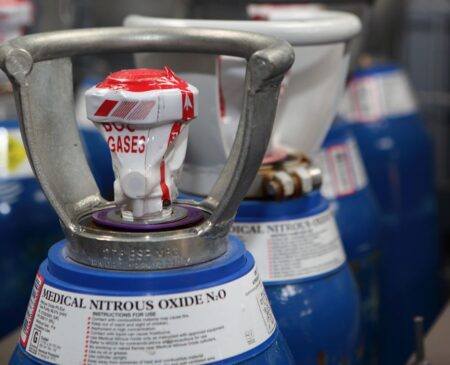
Our First Remote Teams Booking: Tailored Medical Gas Safety for an IVF Clinic
We are delighted to have taken our very first booking through our new remote training service, a tailored “Using Medical Oxygen, Medical Air and Nitrous Oxide (Entonox) Gases Safely” course for a UK IVF clinic that we will deliver live […]
-

Why Is Dry Ice Called Dry Ice?
A question that we frequently get asked is: Why is dry ice called dry ice? At normal temperature and pressure, carbon dioxide (CO2) is a gas. When cooled, CO2 solidifies at -78 degrees C and is known as solid CO2 […]
-
Are Your Operators Lighting Oxy-Fuel Gas Systems Correctly?
In fabrication workshops the length and breadth of the UK we frequently find time-served operators who have not been trained how to correctly light oxy-fuel gas systems and who use either the wrong spark lighter or a naked flame (cigarette […]
-
Why Oxygen Depletion Is Such a Serious Hazard
It goes without saying that oxygen is the only component of the air we breathe that is capable of supporting life. Air is composed of approximately 21% oxygen, 78% nitrogen and other trace gases. Asphyxiation is the greatest hazard associated […]
-
Why Risk Assessments for Compressed Gases Require Specialist Knowledge
The Management of Health and Safety at Work Regulations place a legal requirement to undertake a risk assessment prior to undertaking a work activity. Risk management is a step-by-step process for controlling health and safety risks caused by hazards in the workplace. […]
-
Gas Cylinder Fire Safety: Are You Prepared
During our training workshops and when we undertake site surveys, we always ask delegates if they have evacuation procedures if a fire is discovered on site. They always do. We then ask where the fire evacuation muster points are located. […]
-
How Do You Identify the Contents of a Gas Cylinder?
A question we always ask on our gas safety workshops is: “How do you identify what type of gas is inside a cylinder?” After a roll of the eyes from most staff and the thought “that’s an easy question”, they almost always […]
-
Moving Gas Cylinders Safely: Manual Handling Guidance
Gas cylinders are big, heavy and relatively unstable. They are 5 feet tall, stand on a ten inch diameter base and weigh 90 kg. They are basically a very heavy pencil stood on its end. The bywords when moving gas […]
-
Liquid Withdrawal Devices: Safer Handling of Liquid Nitrogen
We frequently visit clients who simply decant (pour) liquid nitrogen from a 25 litre dewar into a smaller working flask by manually tipping the dewar and (hopefully) aiming the liquid into the flask which they have placed on the floor. […]


